
For Italians, Christmas is an important time – not only an occasion that has religious meaning but also a time for family and friends to come together to celebrate the good things in life; and to an Italian, that of course includes delicious food and drink.
Storia e Tradizioni Italiane
History and Italian Traditions
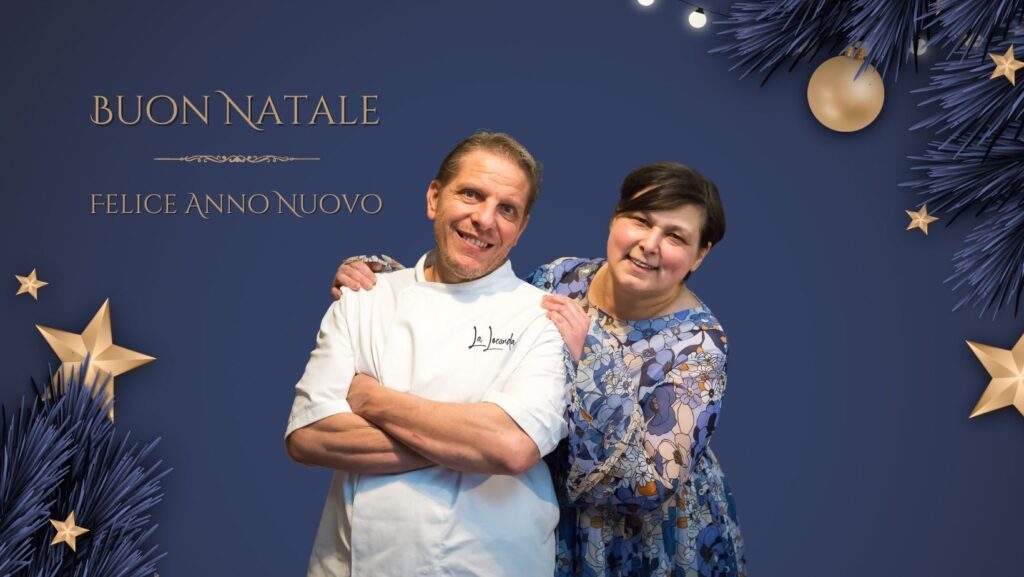
La Locanda’s husband-and-wife team, Maurizo and Cinzia are both natives of Lake Maggiore which straddles two of Italy’s most northern regions, Piedmont and Lombardy.
Cinzia says “In my region of Lombardy we put up the Christmas decorations and tree on the 7th December – the day of the feast of Sant’Ambrogio and Patron of Milan. In Bari, they decorate on 6th December and in general all over in Italy on the 8th. Traditionally, decorations are taken down on 6th January – the day of the Epiphany feast.”
The Christmas season in Italy begins when the melodies of festive bagpipers (Zampognari) can be heard in the streets, dressed in traditional costumes, singing Christmas music. Dating back to ancient Roman times, they represent the shepherds coming down from their mountain homes to perform for the townsfolk in a bid to earn an extra income.
Natività is born

St. Francis of Assisi conceived the first known ‘living’ nativity scene in Greccio, Umbria in 1223, on the night of Christmas Eve. As it was forbidden at this time to hold sacred representations in the Church, St. Francis obtained the approval of Pope Honorius III to hold an open-air Mass on the streets of the Umbrian village.
Natività is born
St. Francis of Assisi conceived the first known ‘living’ nativity scene in Greccio, Umbria in 1223, on the night of Christmas Eve. As it was forbidden at this time to hold sacred representations in the Church, St. Francis obtained the approval of Pope Honorius III to hold an open-air Mass on the streets of the Umbrian village.
The first nativity scene with figurines dates back to 1289. Sculptor Arnolfo di Cambio created eight wooden statuettes representing the Holy Family. The original ox, donkey, and crib (Magi) are preserved in Rome’s Basilica of Santa Maria Maggiore.
Read more about the traditions at Christmas time in Italy here.
Quale Aperitivo?
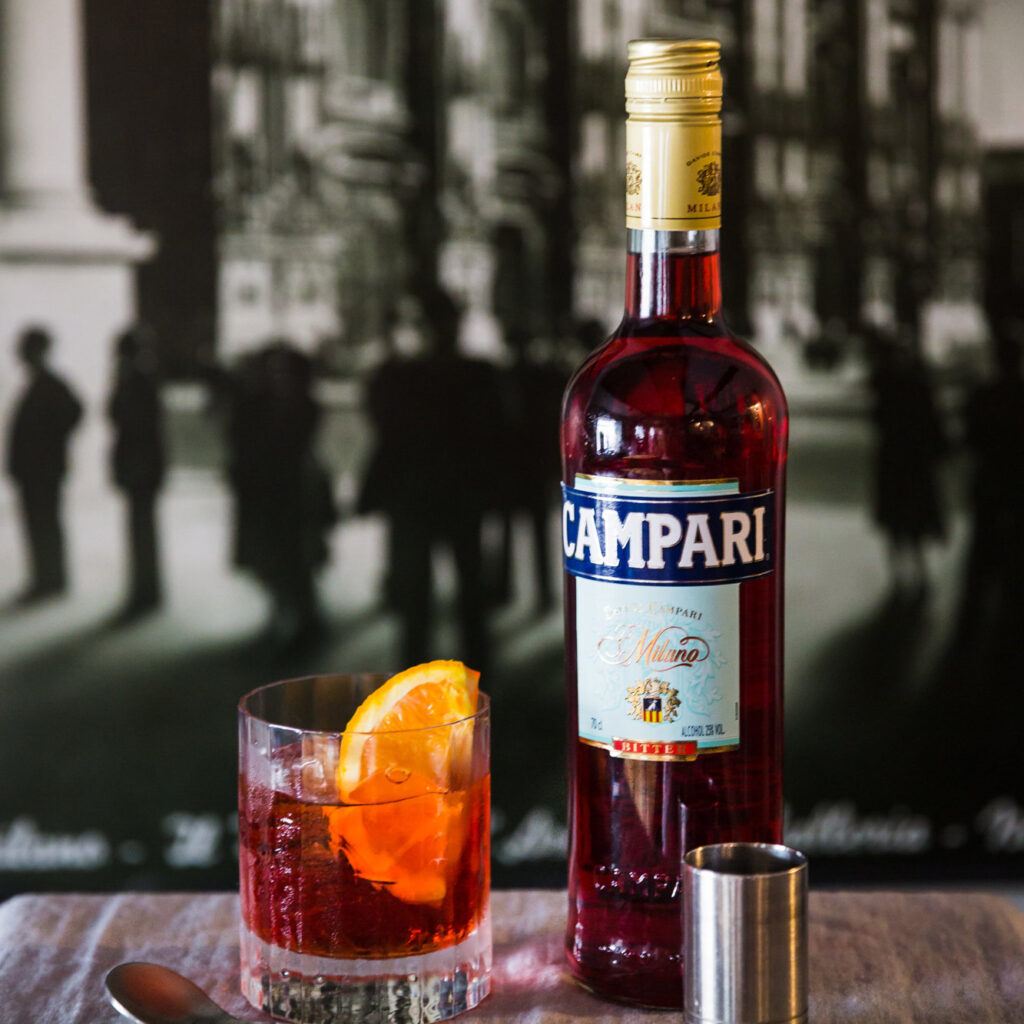
A traditional aperitif at Christmas time does not have to be a simple Prosecco. Choose an Aperol Spritz (a trendy aperitif in Italy, made as you would drink it in Treviso – Prosecco and Aperol). Or a Bellini from Venice (an elegant Prosecco with peach). Or for gin lovers, try a Negroni Classical from Milan (Campari, gin and red Martini for a must).
Italian Christmas dishes
Meal time in Italy is an opportunity to socialise and relax. A meal can often take four hours, or longer when it’s a special occasion. And Christmas time is no different…
Each Italian region has their own traditions based on their history and local heritage. And typical Christmas dishes vary from region to region:
Veneto – Polenta with cod and boiled meat in sauce
Lombardy – Eel baked in foil
Piedmont – Agnolotti and boiled meats seasoned with sauce
Valle d Aosta – Carbonade (beef cooked in red wine)
Trentino – Canederli (bread dumplings) and venison
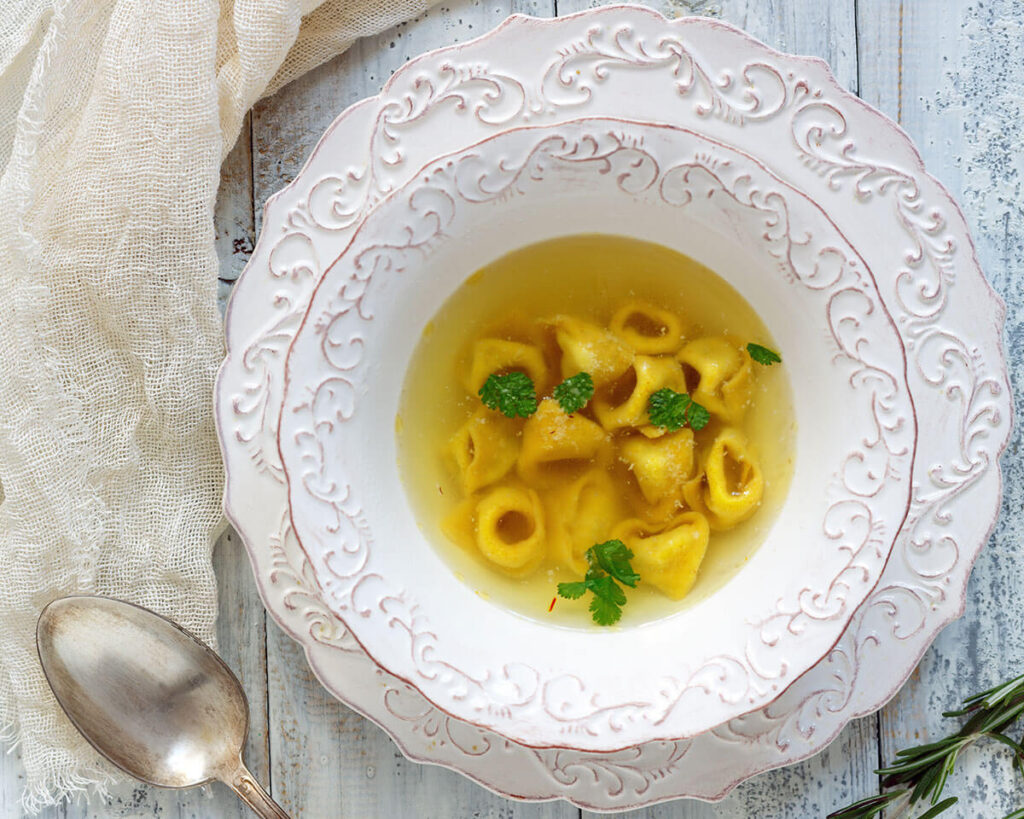
Emilia Romagna – Tortellini and passatelli in broth
Molise – Brodetto alla termoli
Tuscany – Chicken livers and roast guinea fowl or stuffed capon
Campania – Spaghetti with clams, capon broth or stuffed capon
Sardinia – Colurgiones de casu (stuffed ravioli) and malloreddus (small dumplings)
Sicily – Hen in broth and pasta with sardines.
Veneto – Polenta with cod and boiled meat in sauce
Lombardy – Eel baked in foil
Piedmont – Agnolotti and boiled meats seasoned with sauce
Valle d Aosta – Carbonade (beef cooked in red wine)
Trentino – Canederli (bread dumplings) and venison
Emilia Romagna – Tortellini and passatelli in broth
Molise – Brodetto alla termoli
Tuscany – Chicken livers and roast guinea fowl or stuffed capon
Campania – Spaghetti with clams, capon broth or stuffed capon
Sardinia – Colurgiones de casu (stuffed ravioli) and malloreddus (small dumplings)
Sicily – Hen in broth and pasta with sardines.
It is not unusual to have twelve courses, sometimes more! With a traditional Italian Christmas meal structure looking something like this:
- Aperitivo– aperitif
- Antipasto Caldo – warm starter
- Antipasto Freddo – cold starter
- Primo Piatto – pasta or risotto at lunch (or light pasta, risotto or gnocchi at dinner)
- Secondo Piatto di Pesce– fish course
- Secondo Piatto di Carne – meat course
- Formaggi – cheeses
- Dolci – dessert
- Frutta – selection of fresh fruits
- Caffè – coffee
Ammazza Caffè (coffee killer) – a shot of liqueur - Cioccolatini o dolcetti – chocolates or treats
Sweet Italian offerings
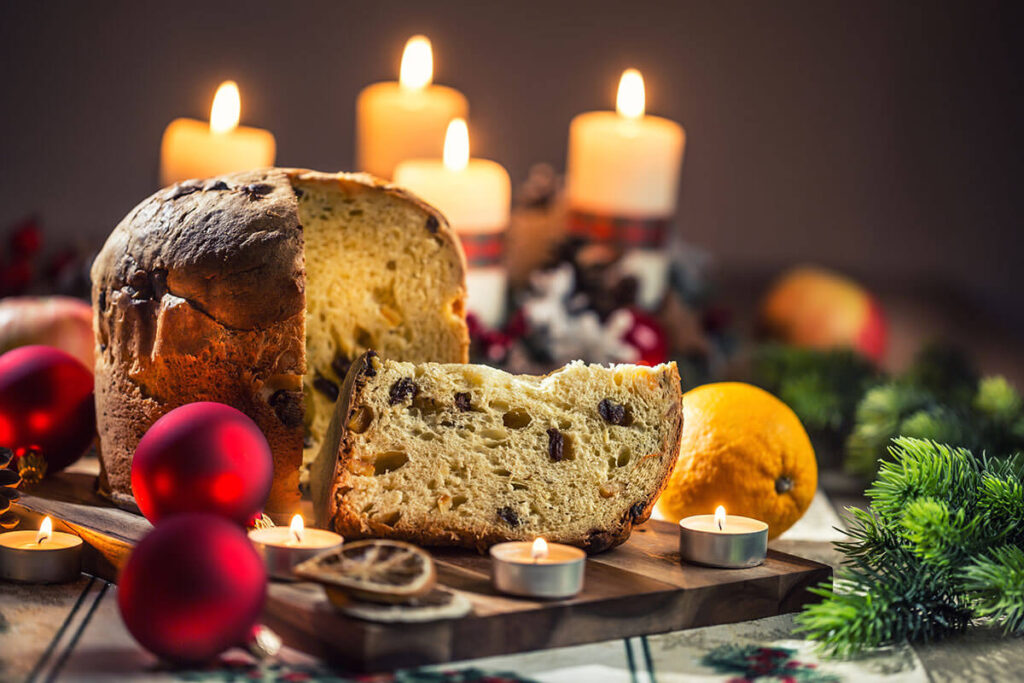
A staple food on all Italian tables is dried fruit and desserts such as panettone, nougat and pandoro:
Panettone is a dessert from Milan. An early legend (end of 1400) introduces Ughetto degli Atellani – a protagonist and son of a well-known leader. Ughetto falls in love with Adalgisa, the daughter of a pastry chef named Toni. To stay close to Adalgisa, Ughetto improvises as a pastry chef and invents a leavened sweet bread with the addition of butter and candied fruit. The young man marries Adalgisa and the dessert is a great success – to the point that people travel from every district to buy the ‘pan del Ton’.
A second legend dates back to the same period. During Christmas Eve celebrations, at the court of Ludovico, a dome-shaped cake containing grapes is prepared. The dessert burns during cooking and the and the cook panics! A helper named Toni suggests serving the domed bread anyway by presenting it as a crusty specialty. The guests appreciate it so much that ‘pan del Toni’ was born.
… Tradition states you should keep a piece of panettone from Christmas dinner and eat it on an empty stomach on 3rd February (San Biagio) with family to soothe against sore throats and colds.
Pandoro is a classic Italian Christmas recipe. Originated in Verona, this delicious cake is a nineteenth-century evolution of Nadalin. Invented and patented by Domenico Melegatti in 1894, the eight-pointed star shape of the pandoro was chosen by impressionist painter Angelo Dall’Oca Bianca.
Torrone (nougat) derives from the Latin torreo, meaning ‘to toast’ (in reference to the roasting of the hazelnuts found inside the Christmas cake). Typically made with egg white, honey and roasted or candied nuts, its origins can be traced back to the 17th and 18th centuries in Benevento.
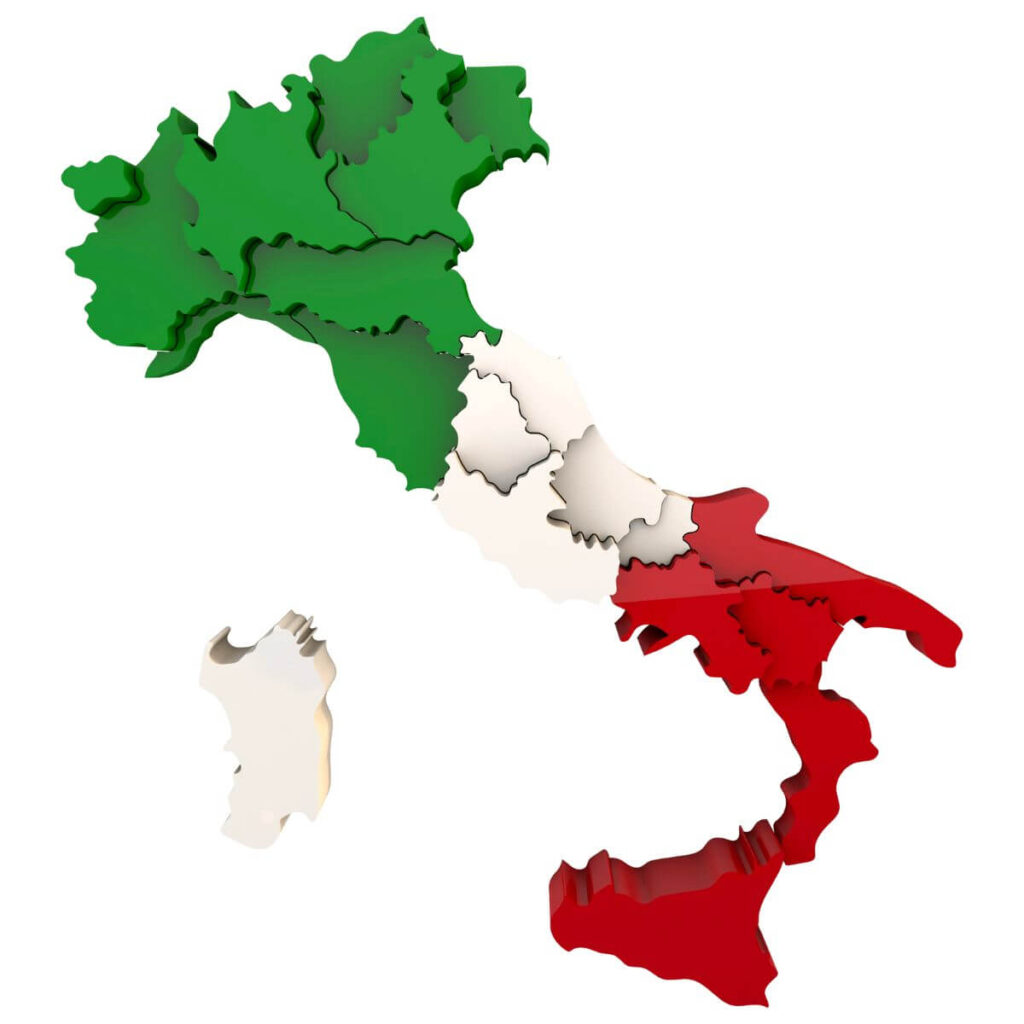
Italian regions also have their own traditional Christmas sweets:
Lazio – Panpepato or Panpapato (a slightly spicy dough with dried fruit, raisins, honey, candied fruit and chocolate)
Castelli Romani – Pangiallo (similar to gingerbread but sweeter – a dough based on dried fruit, dried figs, eggs and candied fruit)
Viterbo – Tozzetti (dry cookie with hazelnuts but can also include pistachios, candied fruit and chocolate)
Liguria – Genoese pandolce (made with water, flour, raisins, candied fruit and pine nuts)
Campania – Struffoli (balls of sweet dough fried in oil or lard and then decorated with candied fruit and coloured sugared almonds)
Puglia – Mostaccioli (spiced and often covered with a sugar or chocolate glaze)
Tuscany – Panforte (almonds, candied citrus peel, flour, honey and spices) or soft Cantucci.
This Christmas season, La Locanda invite you to join them to celebrate with friends, family and colleagues – taking you to the heart of Italian fine-dining right here in the Ribble Valley. Serving you authentic, festive Italian recipes that go back generations, using the finest local ingredients.
A festive and cosy atmosphere, delicious food, fabulous wines and of course a very warm welcome
